

The debate surrounding Ohio’s unspent $536 million General Revenue Fund (GRF) surplus intersects with a looming fiscal crisis for the state’s public education system.
Public education advocates, coalitions, and Democratic lawmakers are leveraging the state’s record-high unencumbered cash balance to argue that the legislature is intentionally shortchanging public school districts.
1. The Core Conflict: The Abandoned “Fair School Funding Plan“
The primary flashpoint is that the legislature did not fully fund the final phase of the Fair School Funding Plan in the FY 2026–2027 biennial budget.
- The Funding Gap: Policy groups estimate that the enacted state budget shortchanged public schools by $2.75 billion compared to what the formula requires to ensure adequate education across all zip codes.
- Plunging State Contributions: Because the state did not fund the full model, the statewide average for the state’s share of calculated base education costs plummeted to 32.2%. This is down from 43.3% in FY 2024 and represents the lowest level of state support in over two decades.
2. Proponents of Spending the Surplus on Schools
Education advocacy organizations, such as Honesty for Ohio Education and the Heights Coalition for Public Education, argue that the remaining $536 million should be immediately deployed as emergency categorical aid. They outline severe operational issues:
- Impending Deficits: Analytics track that more than 20% of Ohio school districts are projected to entirely run out of operating funds by fiscal year 2029. High-profile districts like Cincinnati Public Schools have already been placed in formal “fiscal caution” by the state over projected shortfalls.
- Vulnerable Demographics: Advocates want the unspent half-billion directed specifically toward underfunded categorical brackets, including students living in poverty, disabled students, and English language learners. [1]
- The Voucher Offset: Critics point out that while public funding stalled, the legislature allocated a record $2.4 billion to private and charter school voucher expansions.
The Counterargument and Alternative Uses
Legislative leadership and conservative fiscal analysts view the surplus differently, pushing back against absorbing the one-time money into permanent school formulas: [1, 2]
Tax and Revenue Reprieves: Rather than public school allocations, the legislature has prioritized utilizing surplus funds for direct consumer economic reliefs. For instance, Governor DeWine signed a three-month gas tax reprieve (House Bill 519), pulling over $700 million from the budget surplus to offset highway funds eliminated when the legislature voted to approve the temporary waiver of the state gasoline tax.
One-Time vs. Ongoing Funds: Lawmakers point out that federal pandemic aid (CARES and ARPA) has entirely dried up. They argue that using a temporary revenue surge to fund ongoing baseline educational salaries or long-term operational costs creates unsustainable “structural deficits” for future budgets.
The Problem with the Legislature’s Argument
The lawmakers fail to recognize these aren’t “one-time funds”. Part of the surplus was created by not fulfilling their Constitutional Obligation outlined in Article VI, Section 2 of the Ohio Constitution which states:
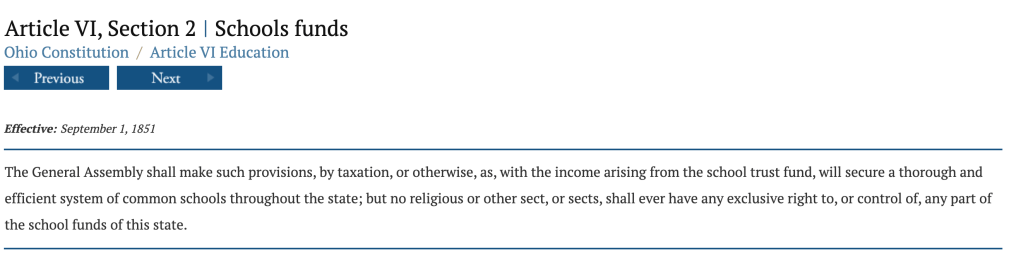
The Ohio Supreme Court (OSC) has held that this requires the state to ensure adequate educational opportunities and sufficient resources for Ohio’s public school students. Additionally the OSC has previously ruled the funding system is unconstitutional because of the inequities enabled by this approach.
The state’s latest approach originated from the budget passed in June Ohio legislators sent a budget to Gov. DeWine that gives a billion-dollar annual tax break to Ohioans earning six figures.
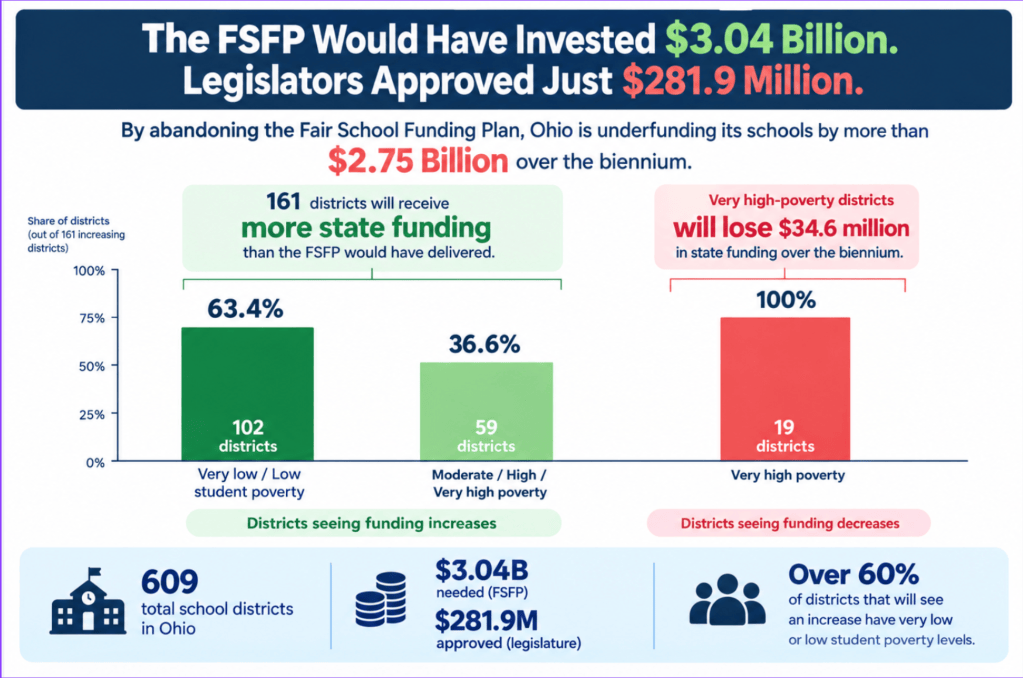
This tax cut was made possible, in part, because the legislature is underfunding schools by $2.86 billion, as compared to the amount the Fair School Funding plan says schools need to provide an adequate education, regardless of their zip code. The proposal fails Ohio students and leaves those with the greatest need furthest behind. Source: Policy Matters
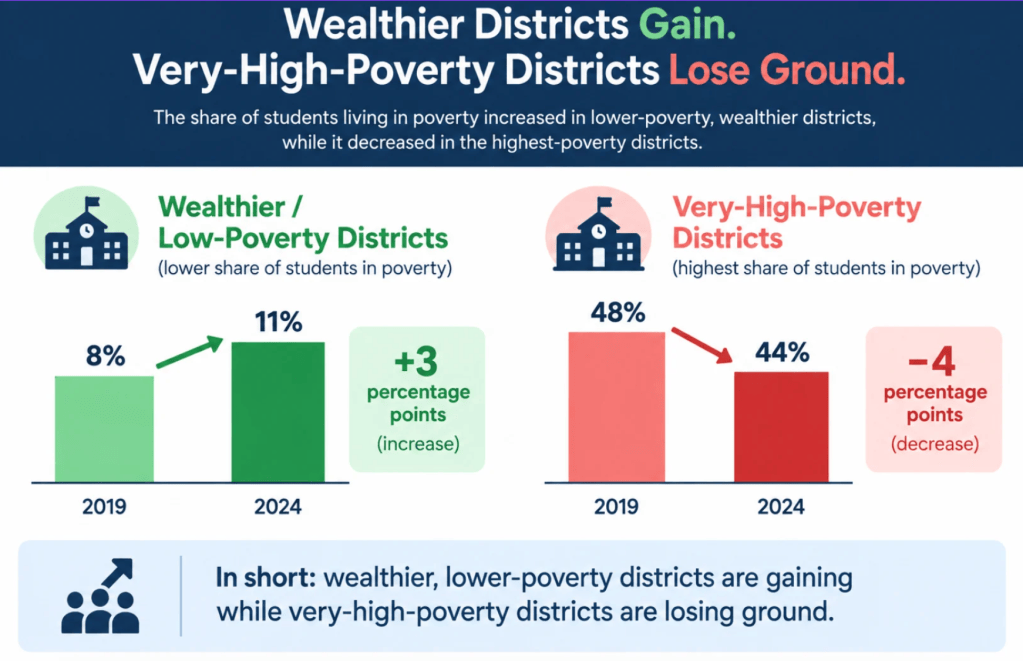
The shortfall and the legislature’s approach to implementing the shortchanged funding has more heavily disadvantaged schools in areas with higher economic distress and provided more for wealthier districts.
Because the state has not filled the formula gap, districts are increasingly forced to ask local voters for new property and income tax levies to protect core student programs.
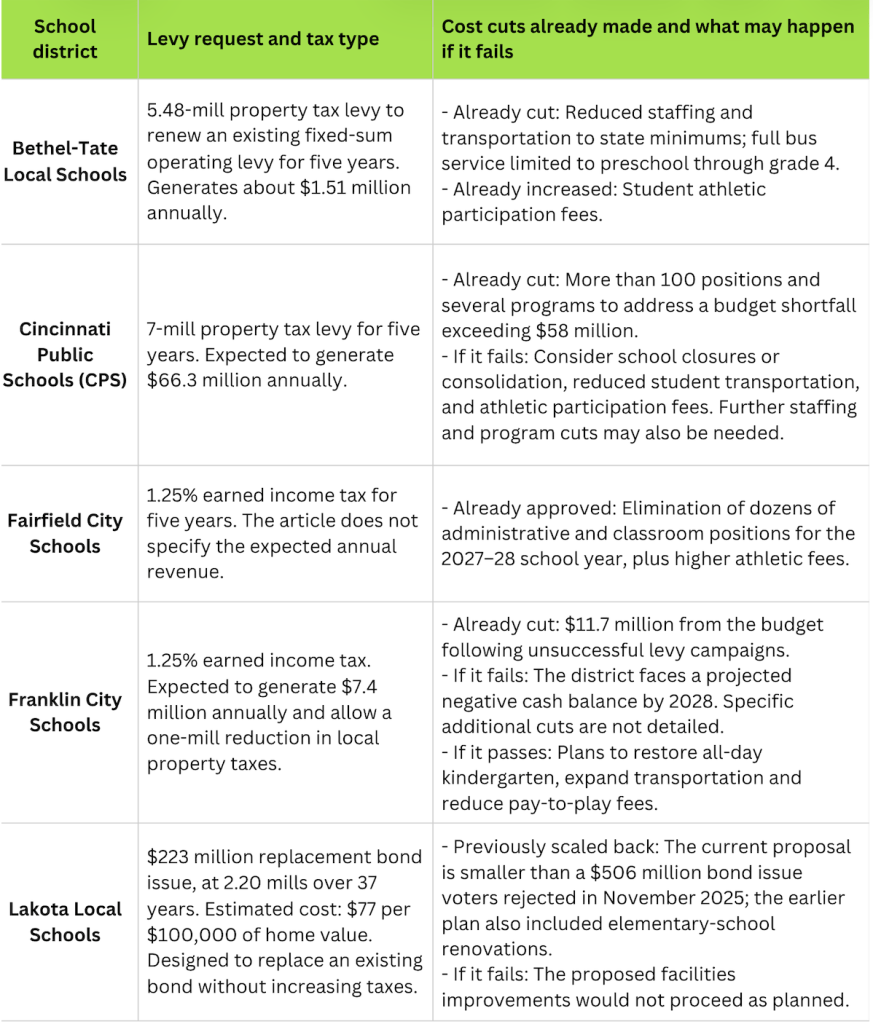
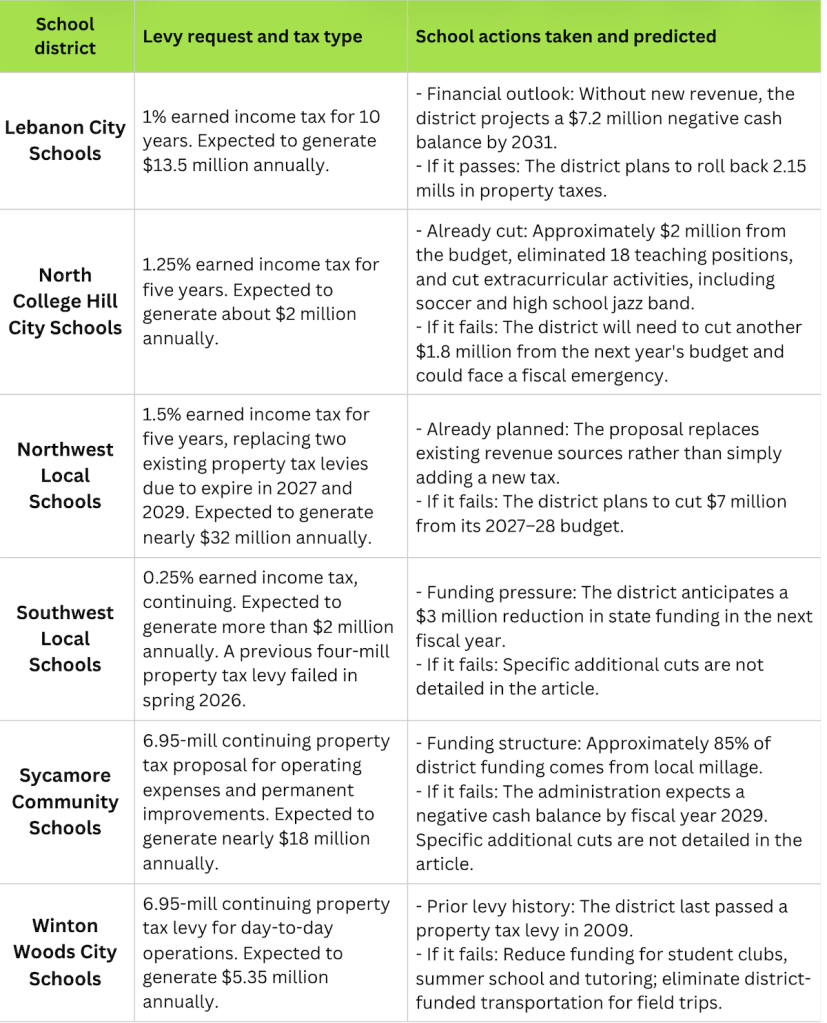
Local NPR journalists published an article recently highlighting the specific levies and gaps in schools in southwest Ohio. These levies are a consequence of the schools not receiving the amount of money they are owed under the law and the legislature’s own calculations.
Which schools in Southwest Ohio have levies on the ballot:
Largest stated operating revenue requests: Cincinnati Public Schools ($66.3 million annually) and Northwest Local Schools (nearly $32 million annually).
Explicit dollar amounts for planned cuts if a levy fails: North College Hill ($1.8 million) and Northwest Local ($7 million).
Districts with significant cuts already made: Cincinnati Public, Fairfield, Franklin, North College Hill and Bethel-Tate.
Important distinction: Lakota’s proposal is a facilities bond, not an operating levy. Some districts have clearly stated contingency cuts, while others report financial risks without specifying the exact cuts they would make.


Leave a comment